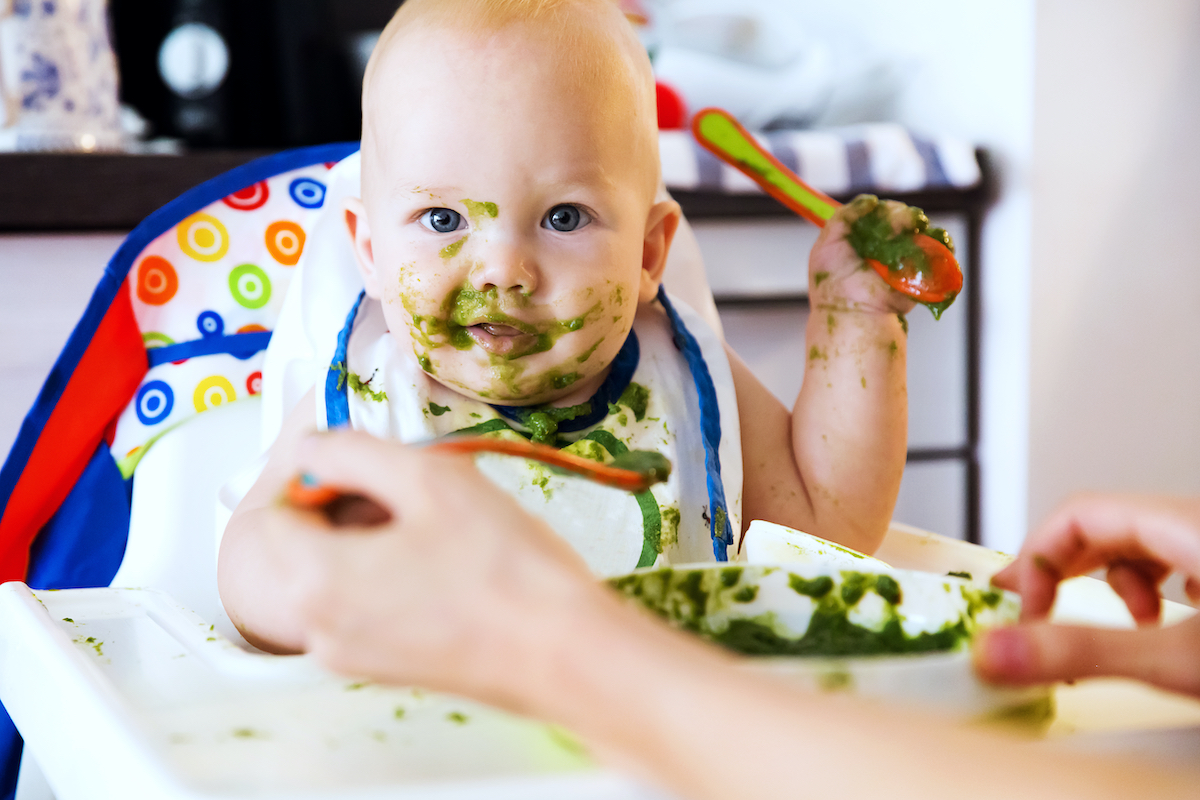
You don’t have to be a master in the kitchen to make your own baby food.
All you need are wholesome ingredients, some basic cooking supplies, and a blender (blending wand, food processor, food mill, or, if you want to get fancy, an all-in-one baby food maker).
While convenient, commercial baby foods may lose vitamins and nutrients during processing, as well as the “yumminess” that can make your baby excited to try new foods and combinations.
According to a 2013 study, babies who started eating some types of solid foods by 6 months old had a reduced risk of allergies and asthma.
A few things to keep in mind
HELPFUL TOOLS FOR MAKING THE BEST BABY FOOD PUREES
Here are a few of my favorite kitchen tool essentials to make the process of cooking, blending and freezing baby food super simple.
A few things to keep in mind when thinking about baby food:
- New eaters only need about 1 to 2 tablespoons of a food, so keep portions small.
- Be on the lookout for allergies, especially when feeding your child foods that contain common allergens. Common allergens include eggs, peanut, wheat, soy, fish, and shellfish.
- The newest evidence shows there is no benefit in delaying introducing these foods beyond 6 months or to introducing foods in any particular order.
- Most of all, don’t forget to have fun!
Some people prefer to go organic, wild, pastured, and grass-fed whenever possible. Some foods may be higher in pesticide residue, including:
- apples
- peaches
- nectarines
- strawberries
- grapes
- celery
- spinach
- sweet bell peppers
- cucumbers
- cherry tomatoes
- snap peas (imported)
- potatoes
Take it one step at a time.